
Student debt: costs rise, literacy lags and credit unions can help

Photo by Tadhanna
Tuition is up. Debt is up. And despite more content than ever about “money smarts,” key outcomes aren’t improving fast enough for young borrowers. In the United States sticker prices and total cost of attendance rose again in 2024-25. In Canada average undergraduate tuition is expected to rise in 2025-26. At the same time student loan balances and delinquencies are climbing while younger borrowers’ credit health softens. The load may not be as heavy as a full course schedule but for many young borrowers it’s close.
Tuition continues to rise
In the U.S., average published tuition and fees in 2024-25 are about:
$11,610 per year at public in-state
$30,260 per year at public out-of-state
$43,350 per year at private non-profit
The average total student budget is about:
$29,910 per year at public in-state
$49,270 per year at public out-of-state
$62,990 per year at private non-profit
Aid lowers net tuition for many in-state students, yet room and board and other costs keep the all-in bill high.
In Canada, Statistics Canada projects a 1.4% increase in average undergraduate tuition for 2025–26 to $7,734. International undergraduate tuition is expected to reach $41,746, up 2.5%, widening the affordability gap. Ontario has extended its domestic tuition freeze but national direction is still up.
Balances and repayment risk
U.S. student loan balances were about $1.64 trillion in Q2 2025. With delinquency reporting fully back after the pandemic pause, 10.2% of student debt was 90+ days delinquent in Q2 2025.
Canada’s federal direct loan portfolio stood at $25.9B as of July 31, 2024 and is projected to reach $33.3B within five years even after Ottawa eliminated interest on federal student loans in 2023.
Credit stress among younger Canadians is visible in credit files. Equifax reports close to 1.4 million consumers missed a credit payment in Q2 2025 with larger strains for those without mortgages and for younger cohorts.
In the U.S., Gen Z’s average FICO score fell three points to 676 in 2025, a larger drop than other age groups, with student loan reporting a key driver.
Who carries the burden
In the United States women hold nearly two-thirds of outstanding student debt and tend to take longer to repay. The gender pay gap compounds repayment time.
In Canada the core-age gender wage gap was 12.6% in 2024 which also stretches repayment timelines for many women.
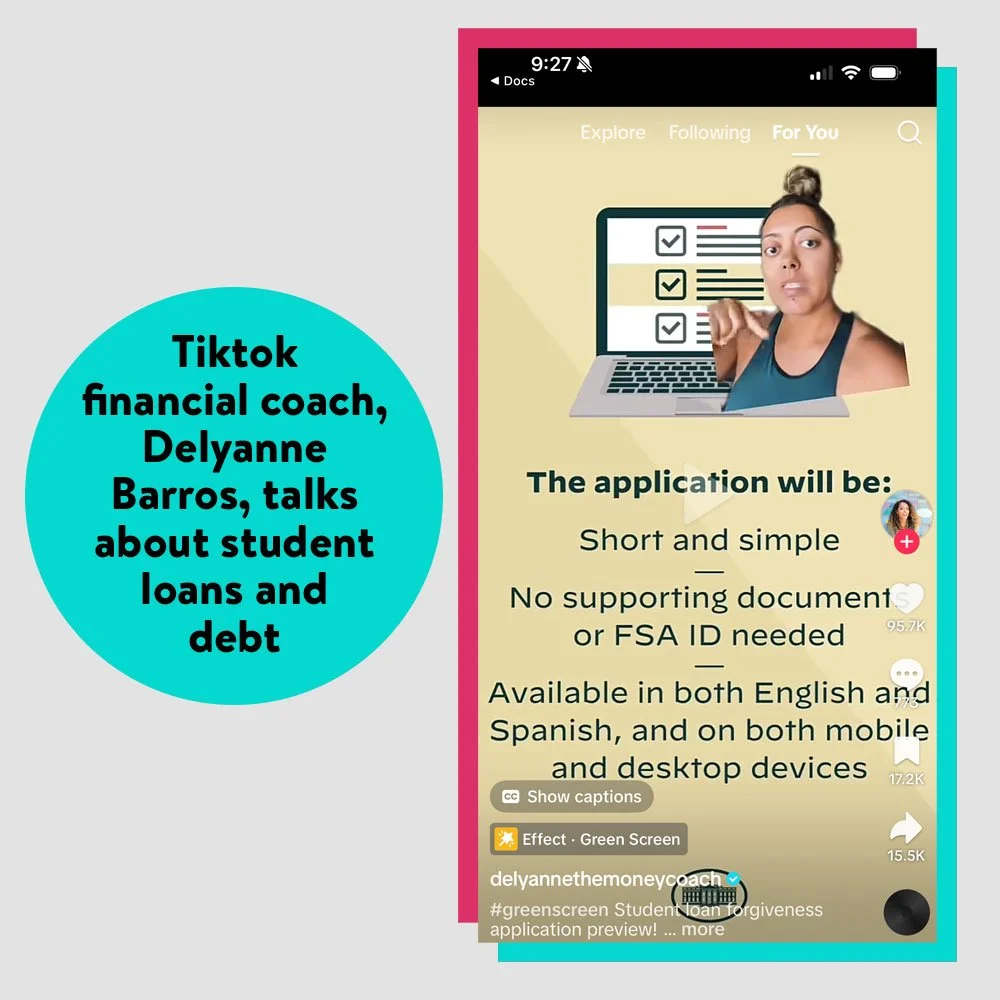
Program outcomes matter
Price alone doesn’t determine risk. The U.S. College Scorecard reports earnings and debt by program which helps families compare value. New Financial Value Transparency and Gainful Employment rules add debt-to-earnings and earnings-premium checks. Programs that repeatedly fail can lose aid eligibility starting in 2026. Independent ROI work from Georgetown’s Center on Education and the Workforce shows wide spreads across programs which is a core driver of borrowing risk beyond headline price.
Financial literacy is part of the solution
Financial literacy is not a slogan. It is a set of skills that show up in real choices and results. That includes reading award letters and separating grants from loans, estimating total cost of attendance and comparing it to likely first-year earnings, understanding interest and amortization and how plan choice changes total cost, using credit with low utilization and keeping a small buffer so an unexpected bill does not trigger a missed payment. These skills don’t set tuition but they do shape borrowing and repayment. Recent U.S. survey data show more households struggling to make ends meet and saving less, with young adults scoring lower on several capability measures, which helps explain persistent strain. Canada’s 15-year-olds outperform the OECD average in financial literacy with 15% at the top proficiency level yet gaps by background remain. Advocacy groups warn that the burden is worsening for many Canadian students, aligning with federal portfolio trends and broader credit data.
Where credit unions can focus
Offer a structured program. Consider a financial literacy program such as It’s a Money Thing to standardize education across schools, branches and digital channels. Use it to deliver consistent lessons on budgeting, saving, managing credit and debt, and building an emergency fund.
Pre-borrowing. Sit with families to total tuition plus living costs and model monthly payments under a standard plan and an income-driven plan. In Canada explain how the Repayment Assistance Plan works. In the United States review current federal repayment options before students borrow or as they enter repayment.
During school. Teach a simple monthly budget, keep card balances below 30 percent of limits and build a starter emergency fund to avoid missed payments.
At repayment. Turn on autopay, select a plan that fits early-career income and schedule an annual checkup to adjust if needed. In Canada guide eligible borrowers to the Repayment Assistance Plan. In the United States walk members through current plan choices and servicer notices.
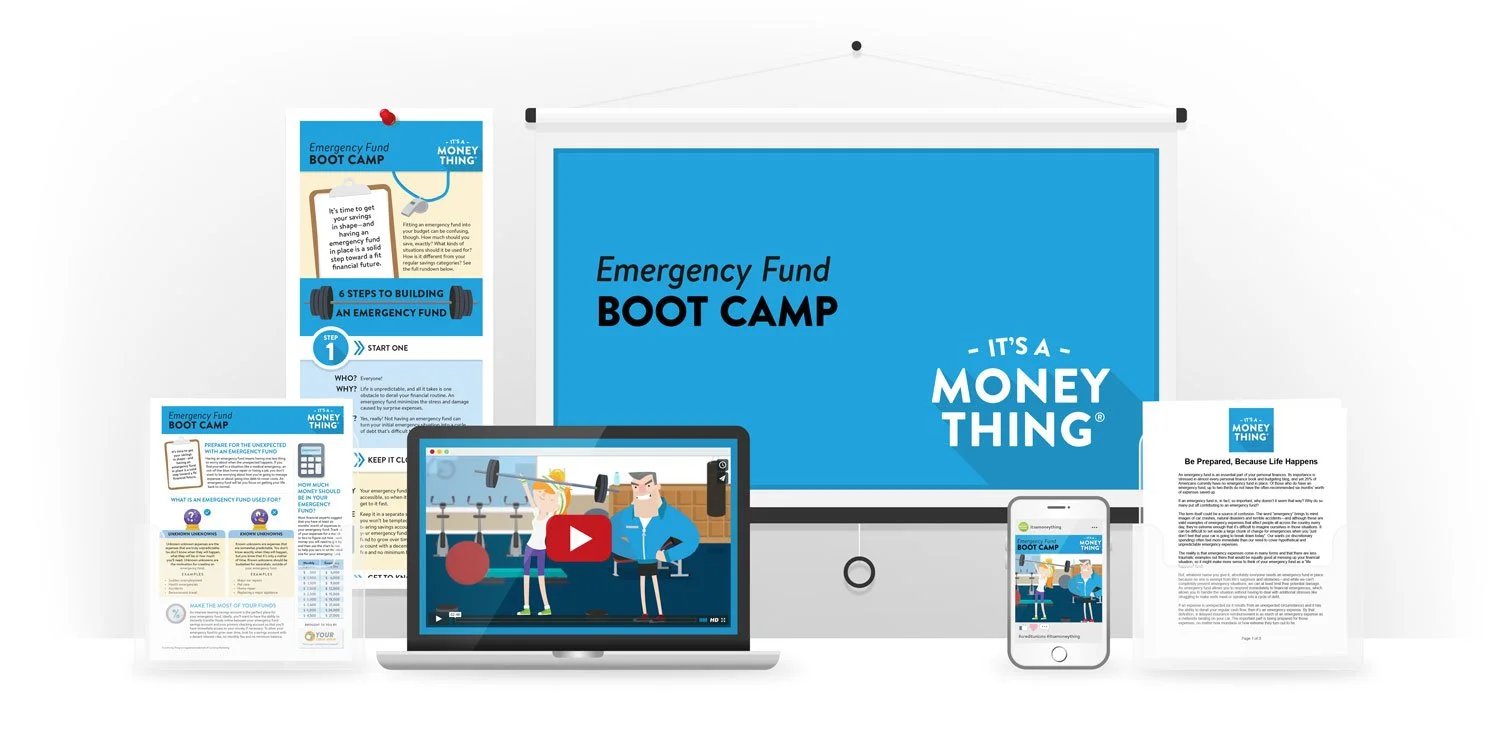
A scalable path: It’s a Money Thing
It’s a Money Thing from Currency Marketing gives credit unions a ready-to-run financial education program for schools and communities. It includes animated videos, classroom lesson plans, printable handouts, articles and social assets that make core money skills clear and usable. Topics focus on budgeting, saving, managing credit and debt and building an emergency fund. Content works in classrooms, branches and digital channels and can be co-branded so teams can publish consistently without creating curriculum from scratch.
Example rollout and measures
Education delivery: use It’s a Money Thing lessons each term across channels, including classrooms with school partners, in-branch sessions and online.
Simple follow-ups: help participants set a monthly budget, turn on autopay and start an emergency fund.
Touch points: brief check-ins at graduation and at first job start.
Metrics to monitor: participants per lesson and total reached, follow-up appointments, autopay set-ups and on-time payment rate for members aged 18 to 24.
