
Financial inclusion is more than account ownership

Salsa Festival at the National Museum of the American Latino
Credit: Norwood Photography
Each autumn, Hispanic Heritage Month in the United States (September 15 to October 15) and Latin American Heritage Month in Canada (October) recognize the histories, cultures and contributions of Hispanic and Latin American communities. They also provide an opportunity to reflect on a broader question: what does genuine financial inclusion look like? Opening a checking account is an important first step, but it is only one measure of financial inclusion.
For credit unions, the conversation is increasingly relevant. Hispanic Americans now represent about one in five U.S. residents, while Canada's Latin American population has grown rapidly over the past two decades. These communities are diverse in culture, experience and financial priorities, but they represent a growing proportion of the members many credit unions already serve or hope to serve.
Financial inclusion extends beyond access to financial services. It also depends on whether people understand the financial decisions they make throughout their lives, know where to find trusted information and feel equipped to make informed choices. Financial education has an important role to play in building that understanding.
Access does not tell the whole story
The number of people using mainstream financial institutions has increased significantly over the past two decades, but differences between population groups remain. The gap has narrowed in many areas, yet account ownership, borrowing patterns and the use of alternative financial services continue to vary across demographic groups.
According to the Federal Reserve's 2025 Economic Well-Being of U.S. Households report, 6% of American adults were unbanked. Among Hispanic adults the figure was 12%, compared with 3% among White adults. Hispanic respondents were also more likely to incur overdraft fees and to rely on alternative financial services.
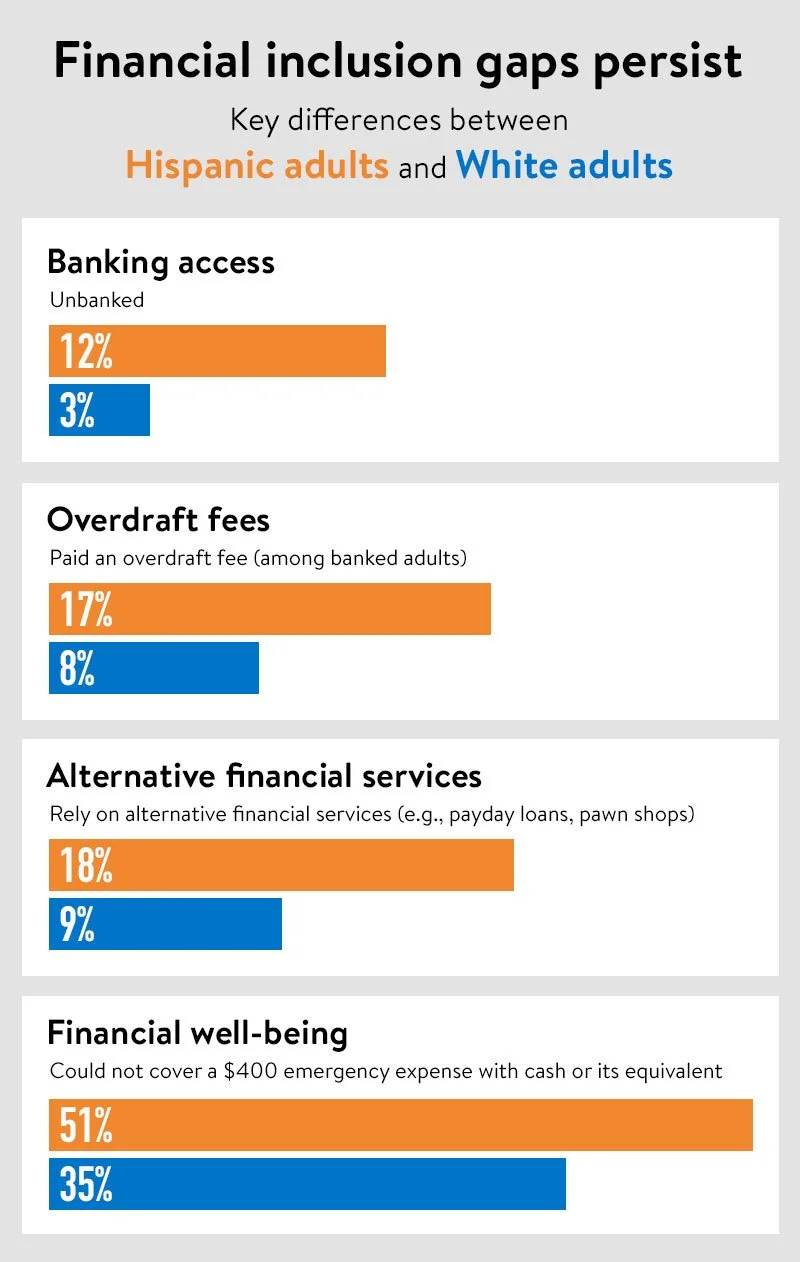
Canada does not publish comparable banking data for Latin American communities. Statistics Canada instead documents the rapid growth and diversity of the population, while the Financial Consumer Agency of Canada increasingly measures financial wellbeing through indicators such as financial knowledge, confidence and behavior rather than account ownership alone.
Although the measures differ, the message is similar in both countries. Access to financial services remains essential, but it is only one part of financial inclusion. The ability to understand financial products, compare options, recognize risk and make informed decisions is equally important.
Access is only the beginning
Financial capability develops through education, experience and confidence. Language is one factor, but it is not the only one. Providing information in Spanish improves accessibility, while education helps people understand the financial concepts that shape everyday decisions.
Whether members are borrowing, saving, managing debt, protecting themselves from fraud or planning for retirement, the underlying financial principles are broadly similar in both the United States and Canada, even though products, regulations and terminology may differ.
Hispanic and Latin American communities are not homogeneous. Members have different financial experiences, different priorities and different questions. Some may be opening their first savings account. Others may be purchasing a home, operating a business, planning for retirement or supporting family members in another country. Some are newcomers. Many have lived in the United States or Canada for most or all of their lives.
Financial education helps people understand the choices available to them, ask better questions and make more informed decisions. Those are benefits that extend to every member, regardless of background or stage of life.
Financial knowledge influences financial outcomes
The connection between financial knowledge and financial wellbeing has been studied extensively over the past two decades. Across countries and demographic groups, the findings are remarkably consistent: people with stronger financial knowledge generally make better financial decisions.
Economist Anna Maria Lusardi and the Global Financial Literacy Excellence Center have shown that people who understand concepts such as interest, inflation, risk and budgeting are more likely to save regularly, prepare for retirement, manage debt responsibly and avoid expensive borrowing. Those relationships have been observed across age groups, income levels and countries.
For credit unions, the research reinforces an important point. Financial education is not simply a community service. Better-informed members are better equipped to use financial products effectively, ask informed questions and make decisions that support their long-term financial wellbeing.
Education has long complemented lending, savings, payments and financial advice. Whether conversations take place in a branch, a classroom, a workplace or online, they help members build the knowledge needed to make sound financial decisions throughout their lives.
Education is part of the credit union difference
Financial education has always been part of the co-operative model. Long before financial literacy became a public policy priority, credit unions were helping members understand borrowing, saving, budgeting and responsible money management through workshops, school programs and one-to-one conversations.
Those efforts continue today through schools, workplaces, community organizations, digital channels and local partnerships. They create opportunities to reach members before important financial decisions are made, rather than only when someone applies for a loan or opens an account.
In the United States, Inclusiv's Juntos Avanzamos designation recognizes credit unions that combine bilingual services, accessible financial products and financial education for Hispanic and immigrant communities. The designation acknowledges that trust, cultural understanding and practical education are all part of meaningful financial inclusion.
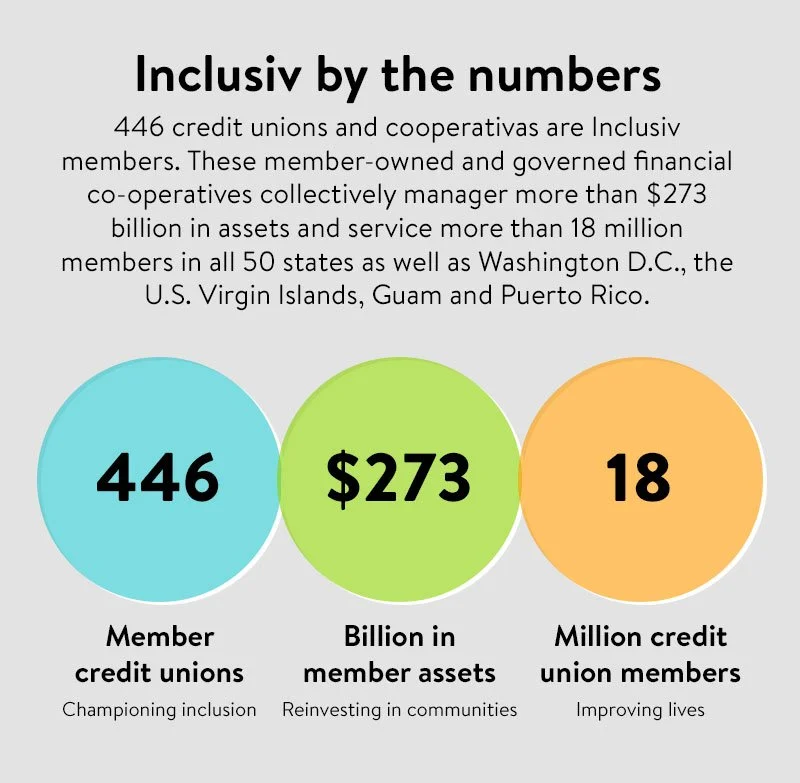
Source: Inclusiv
Canada has no comparable national designation, but many credit unions work closely with schools, settlement agencies, cultural organizations and community partners to strengthen financial knowledge within the communities they serve. While the organizations differ, the principle is the same. Financial education is most effective when it is practical, relevant and delivered by trusted local institutions.
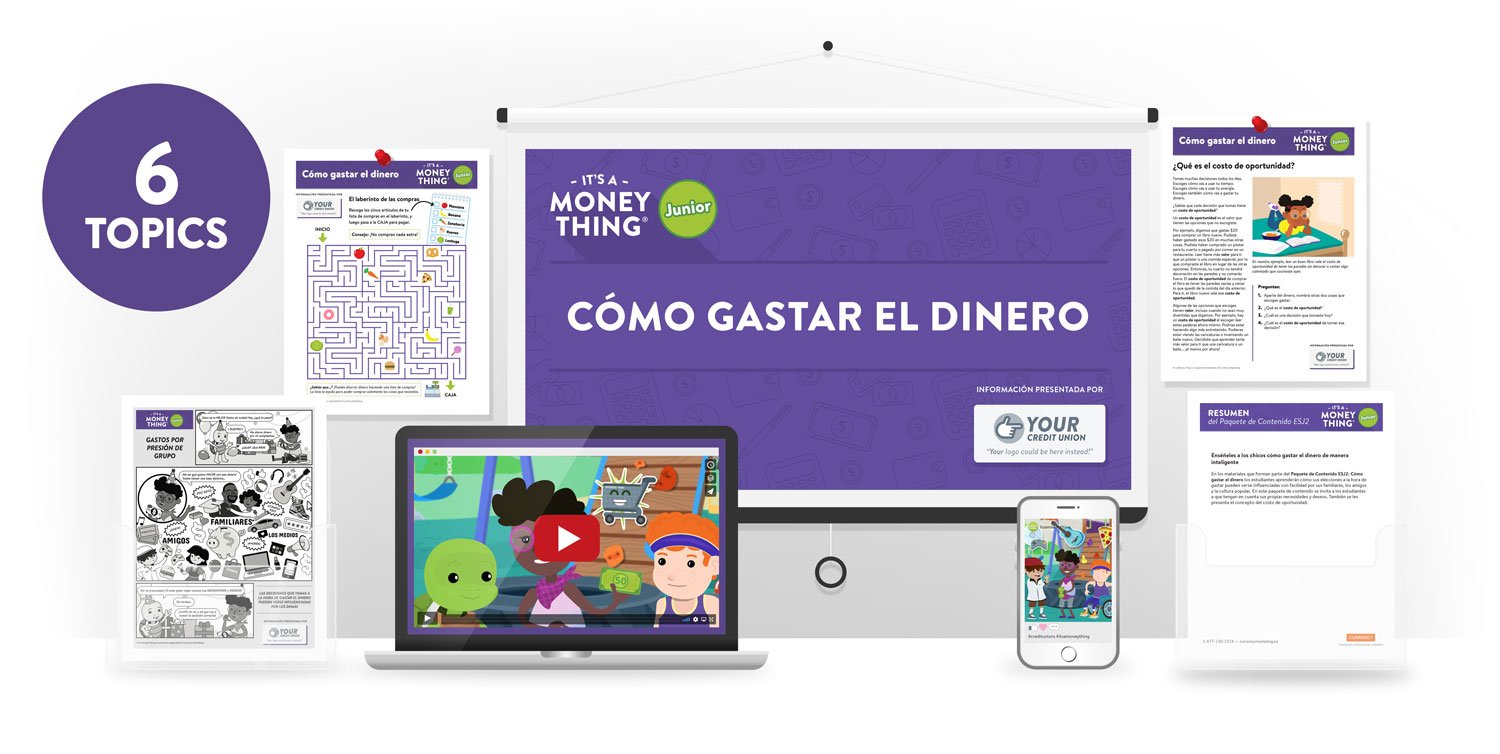
Credit unions are not starting from scratch. Many already use established financial education resources developed specifically for the co-operative sector. Our It's a Money Thing financial education program, including the Spanish Bundle and the new Spanish Junior Bundle, provides ready-to-use education that helps members build financial knowledge while reinforcing the credit union's role as a trusted financial partner. It demonstrates that financial education can be engaging, accessible and relevant without sacrificing accuracy or practical value.
Looking beyond account ownership
Hispanic Heritage Month and Latin American Heritage Month celebrate the contributions Hispanic and Latin American communities make to the United States and Canada. They also encourage a broader conversation about participation in economic life and the role financial institutions play in supporting it.
Opening a checking account is an important milestone, but it is not the destination. Financial inclusion is reflected in everyday decisions: a young family comparing mortgage options, a recent graduate managing credit for the first time, a small business owner financing expansion or a newcomer learning how a different banking system works. These are the moments when financial education moves beyond information and becomes practical knowledge.
Credit unions are uniquely positioned to support those moments because education has always been part of their purpose. Every conversation, workshop, classroom presentation, digital lesson and community partnership helps members make better financial decisions while strengthening their relationship with the credit union.
It's a Money Thing extends that role by giving credit unions practical resources that meet members where they are and support learning throughout life's financial journey.
Account ownership is the starting point. Financial inclusion develops through education, understanding and informed decision-making. Hispanic Heritage Month and Latin American Heritage Month provide an opportunity to celebrate not only the communities credit unions serve, but also the role financial education continues to play in helping those communities thrive.
