

Credit: Kampus Production
Most financial education focuses on the first half of life. It teaches people how to budget, build credit, manage debt, buy a home and save for retirement. Those are essential skills, but they represent only one stage of a member’s financial journey.
Retirement brings a different set of financial decisions. A member who retires at 65 may spend another 20 or 30 years managing income, protecting savings, adapting to new technology and preparing for changes in health, housing and independence. Financial education does not become less important during those years. It simply needs to address different questions.
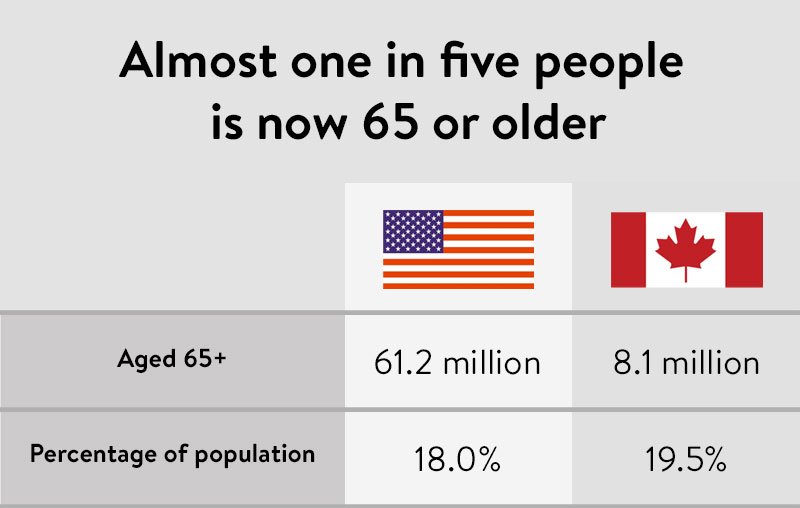
This is a growing part of the population on both sides of the border. The United States had 61.2 million people aged 65 and older in 2024, or approximately 18% of its population. Canada had 8.1 million people aged 65 and older in the same age group, representing 19.5% of the population.
Sources: U.S. Census Bureau (2024) and Statistics Canada (2025)
The financial questions change
Preparing members for retirement remains important, but retirement itself presents new challenges. Accumulating savings gives way to managing withdrawals and making retirement income last. Mortgage payments may be replaced by home maintenance, healthcare, mobility and home-support costs. Estate planning, powers of attorney and future care become more immediate practical financial decisions rather than matters that can be left for later.
The details differ between the United States and Canada. American members face decisions involving Social Security, Medicare, retirement accounts and private insurance. Canadian members may need to understand the interaction between the Canada Pension Plan, Old Age Security, the Guaranteed Income Supplement, workplace pensions and personal savings. In both countries, members must make choices involving taxes, inflation, investment risk and the possibility of needing long-term care.
Financial services are changing at the same time. Many older members use online banking, digital wallets and mobile applications confidently, while others find that authentication systems and rapidly changing technology create uncertainty. Digital access is not the same as the confidence needed to make an important financial decision.
Retirement also exposes knowledge gaps that many people don't realize they have. The 2026 TIAA Institute-GFLEC Personal Finance Index found that U.S. adults answered an average of only 2.2 of 6 retirement-related questions correctly. Just 27% understood Medicare coverage in retirement and 28% understood the likelihood of needing long-term care.
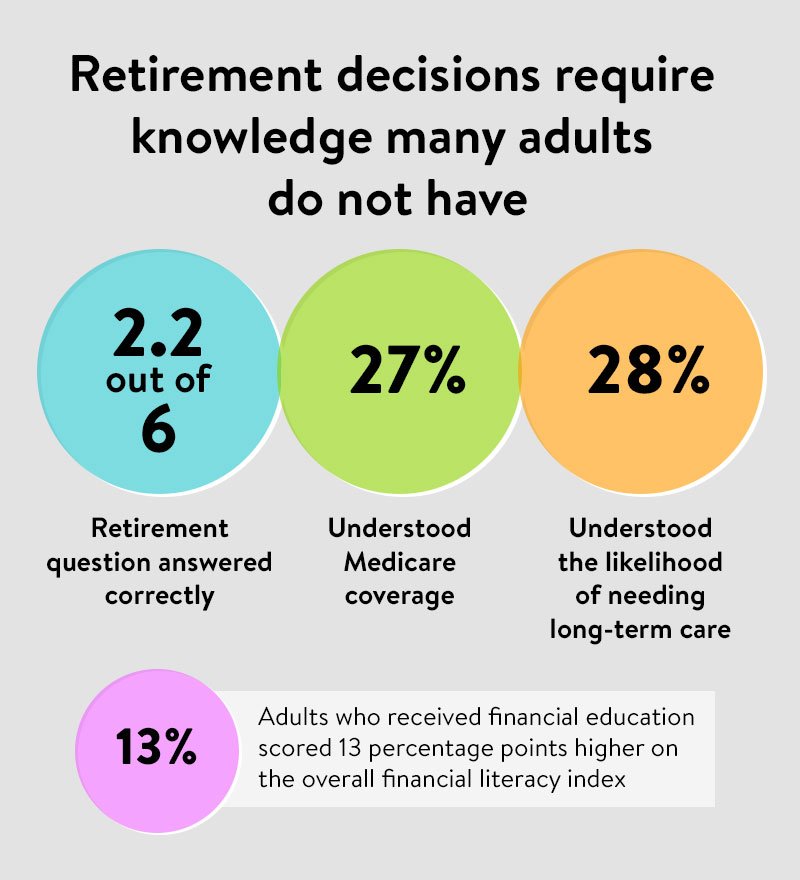
Canadian retirees face similar questions about healthcare, home support and long-term care funding. Adults who had received financial education scored 13 percentage points higher on the overall index than those who had not. In both countries, better information leads to better financial decisions.
Protecting wealth becomes part of financial education
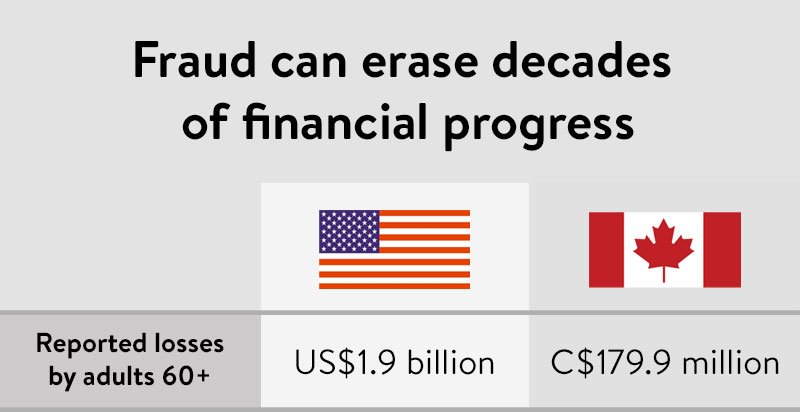
Fraud prevention has become a central part of later-life financial education. Canadians aged 60 and older reported losing at least $179.9 million to fraud in 2024, more than twice the amount reported in 2021. Investment fraud accounted for $111.3 million of those losses.
In the United States, adults aged 60 and older reported losing more than US$1.9 billion to fraud in 2023. Older adults were less likely than younger people to report losing money after encountering fraud, but their reported losses were often substantially higher.
Sources: U.S. FTC (2023) and Government of Canada (2024)
Financial education can help members recognize urgency, impersonation, unusual payment requests and attempts to isolate them from trusted family members or advisers. It can also reinforce a simple habit: stop, verify and seek advice before transferring money or disclosing information.
Financial education becomes a family responsibility
Retirement and aging rarely affect only one person. Adult children often help parents review suspicious messages, navigate digital banking, evaluate care costs and discuss major financial decisions. They may become informal financial guardians long before any formal power of attorney takes effect.
In the United States, AARP and the National Alliance for Caregiving estimated that 63 million adults were caregivers in 2025. In Canada, 13.4 million people aged 15 and older provided unpaid care to children or care-dependent adults in 2022.
Not every caregiver manages money, but financial responsibilities commonly emerge as health or independence changes. Credit union education aimed at older members can therefore serve a wider audience that includes spouses, adult children and other trusted supporters.
A continuing role for credit unions
Credit unions have long understood that financial education works best when it is practical, accessible and delivered through trusted relationships. That approach remains valuable throughout retirement, whether education is offered in branches, online, through libraries and seniors’ organizations or in partnership with caregiver groups.
Structured resources can begin conversations about retirement income, fraud, estate planning and family involvement. For credit unions, those conversations support more than financial literacy. They strengthen trust, reduce avoidable harm and help maintain relationships with members during what may be the longest stage of their financial lives.
Helping members navigate retirement also requires educational resources that reflect the financial realities of later life. Topics such as retirement income, fraud prevention, estate planning and financial caregiving are becoming as important as budgeting and credit were earlier in life.
It’s a Money Thing supports those later-life conversations. Our Golden Years Bundle covers retirement savings, retirement taxes, budgeting and estate planning, while the wider It’s a Money Thing library includes scams, identity theft, inflation and financial emergencies.

Credit unions have long helped members prepare for retirement, but preparation is no longer enough. Longer lives require financial education that supports members and their families throughout the decades that follow.
